

When I was a brand-new youth worker, I was pretty sure I had it all figured out. I had a large youth ministry program, every event we did was “successful,” and there was a lot of positive momentum coming from the ministry. Just when I thought I had cracked the code for youth group success, I graduated two classes of around 30 youth and at the same time only had two youth confirmands. I had graduated around 75 percent of my regular group and “replaced” them with only a pair of freshmen. All of a sudden, the program that I was so proud of, all the events that were so well received, all of it had to be reevaluated for a much smaller group.
What Youth Need
But in this season of transition that was heavily dictated by the demographics of our congregation, I received a true gift. I was able to reevaluate our whole ministry, and I realized that so much of what I had been doing was focused on feeding the program rather than feeding people. I’m speaking, of course, metaphorically here, as we certainly did use a lot of pizza and chips during this time! The kids were fed physically, but I learned that I needed to do a better job of giving them what they needed spiritually and relationally.
In a previous post, I discussed the importance of having a student-focused confirmation program. The danger in that arena is to focus on teaching lessons rather than teaching students. What I want to do in this post is zoom out a bit from confirmation and think about the broader landscape of our ministry to teenagers. One of the main dangers we run into here is that we focus on leading programs rather than leading people. We spend much of our time focusing on the next event, planning out the calendar, and leading activities. My prayer is that this post helps you to slow down and really focus on the people that God has given you to serve!
Connect with Each Student
A large part of focusing on people rather than programs is to connect with each student in your youth ministry. Keep an actual roster or database of all church members that are of youth group age as well as any friends or others that have been invited by one of their friends to come at one point. Every month, find a specific way to reach out to each of those youth individually. It could be a postcard invite, an encouraging text from one of their peers, connecting with them at a worship service, inviting them to give input on the next Bible study topic, asking for prayer requests, or recognizing one of their athletic or academic achievements on your group’s social media platforms.
Note that this does not have to mean the primary youth leader is making all of these connections. Additional caring and supportive adults as well as peers may be able to take part in these outreach efforts. Keeping a simple database of who contacted each youth, what the contact was, and any additional notes will help the process stay organized. Don’t give in to the temptation to “skip” youth who are either super connected (“we see them every week, they’re fine”) or not connected at all (“they never come, let’s not waste the postage”).
Too often our teenage years can seem like they’re spent as just a “face in the crowd.” By personally making sure each student receives a connection point every month, you’re helping them be seen and letting them know that they belong. It’s about people, not programs.
Emphasize Discussion and Reflection During Bible Study
You can easily get through a Bible study by having the main leader answer all of the questions. But does that really benefit your youth? Not really.
Many students begin to transition educationally from being dependent learners to more independent learners during their teenage years. As this shift out of a pure pedagogical mindset unfolds, you’ll find that older youth are more motivated to learn something when they know it is relevant to their lives. They also need more time to process through the content in their own words. As a result, emphasizing group discussion and personal reflection is really important.
Pete Jurchen’s book Timeless Truth has a great section in chapter 6 about the different types of questions to ask in a Bible study. That has been my go-to resource for years. It helps me make sure that I’m asking deeper questions that help my youth reflect on their experiences and on God’s Word rather than simply using content questions that never actually lead to critical thinking. My previous post, “5 Ways to Encourage Meaningful Discussions in Confirmation Class,” dives into this in more detail.
The key shift here is from “did I make it through the material” (program-focused) to “did each student engage with God’s truth in this study” (student-focused). Utilizing case studies or real-life scenarios, having students write down their thoughts and share them with a neighbor before opening it up to a large group discussion, and having designated small group leaders are a few ways to focus on the engagement of each student during any given study.
Set Goals with Each Youth
In my first call, I worked to build up a youth leadership team, giving some of my upperclassmen opportunities to give input, serve, and lead in various ways. In hindsight, I’m glad that I took the time to build that team, but now realize that I should have expanded it even further.
Seven Practices of Healthy Youth Ministry identifies “opportunities to serve and lead” as one of the core habits that we should strive toward in our ministries. I created that through my youth leadership team, but unfortunately, it only applied to a few of my youth. There were opportunities to serve and lead, but not everyone had those opportunities.
So, in addition to a robust youth leadership team, I now recommend trying to set personalized goals with each youth. I think this can work well when paired with the transition from middle school into high school. You work with each eighth grade graduate and their parents or mentors to identify two to three goals that they would like to set for their time in high school youth group. You can revisit and revise those goals each year as needed.
In this model, each youth is individually encouraged and challenged to learn more about a particular topic, lead an activity or devotion, serve in a specific way, consistently worship, or whatever other goal that you have agreed upon. When you combine these goals together across your roster, it gives your broader ministry some direction as to what the next year or two should look like as you take the list of goals for all of your youth and then plan your programs around those goals. You decide the Bible study topics based on where they need to grow or what is really relevant to your particular group. You select activities and who will lead those activities from the goals. Your leadership team consists primarily of older youth who are then mentoring and encouraging the younger students along the way. Whether your students have an official title or not, connect with them individually and help them set goals so they can remain connected to the church and grow in receiving God’s gifts and sharing those same gifts with others.
Start with People, Not Programs
Youth group is not about pizza, activities, music, or special events. It’s about individual youth being connected to their God and His people. Never lose sight of that. In your next meeting about your youth ministry, I’d encourage you to spend more time thinking about specific people than you do about specific programs. What if those meetings sounded more like this: “How can we get Jim involved? Has anyone heard from Cindy in a while? Who else saw that John medaled at the state tournament? How can we congratulate him? Sherri set a goal to invite a friend to church. What support can we give her in doing that? Last week Tom requested prayers for his aunt who is having surgery. Who is going to follow up with him on that prayer request?”
That’s student-focused ministry. Start with people. Center everything in God’s Word. Then think about the particular ways, and yes sometimes programs, that can best connect these specific people with God’s timeless Word for them!
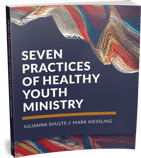 Center your ministry on people, not programs, with practical insights from Seven Practices of Healthy Youth Ministry.


